
Key topics covered in this article include:
- The One, Big, Beautiful Bill introduces major tax changes, including eliminating federal taxes on tips, overtime pay, and car loan interest, directly impacting take-home pay.
- The IRS Tax Withholding Estimator has been updated to help taxpayers adjust their withholding and avoid overpayment or underpayment penalties.
- Workers with multiple income streams, gig workers, and those experiencing life changes should prioritize using the estimator to optimize their finances.
Did you know a massive change to tax law just altered how much money should come out of your paycheck? The passage of the One, Big, Beautiful Bill has introduced sweeping changes to individual tax regulations. These changes directly impact your take-home pay and your overall tax liability.
To help taxpayers navigate these new rules, the Internal Revenue Service recently overhauled its online tools. The most crucial update is to the IRS Tax Withholding Estimator, a free resource designed to help you calculate exactly how much federal income tax your employer should withhold from your pay.
If you ignore these updates, you might end up giving the government an oversized, interest-free loan. Worse, you could face unexpected tax bills and underpayment penalties next spring. We will explore exactly what changed under the new tax legislation, why you need to adjust your withholding immediately, and how to use the updated IRS tool to optimize your finances.
What the One, Big, Beautiful Bill Means for You
The One, Big, Beautiful Bill introduces several highly anticipated tax benefits for individual taxpayers. These new provisions aim to keep more money in the pockets of workers and retirees. Because these changes reduce your overall tax burden, your current paycheck withholding might be too high.
Eliminating the Tax on Tips
For millions of workers in the hospitality and service industries, tips form a substantial portion of their annual income. Under the new legislation, tip income is no longer subject to federal income tax. This is a monumental shift for servers, bartenders, salon workers, and gig economy drivers.
Previously, employers had to calculate and withhold taxes based on reported tip income. Now, workers can bring home the entirety of their earned gratuities. If you work for tips, updating your withholding is essential to ensure your employer stops withholding federal income tax on this portion of your earnings.
Abolishing the Tax on Overtime Pay
Hourly workers who log more than 40 hours a week will see an immediate boost to their bank accounts. The new bill completely eliminates federal income tax on overtime pay. This provision rewards hard work and extra hours by allowing employees to keep every dollar earned at the time-and-a-half rate.
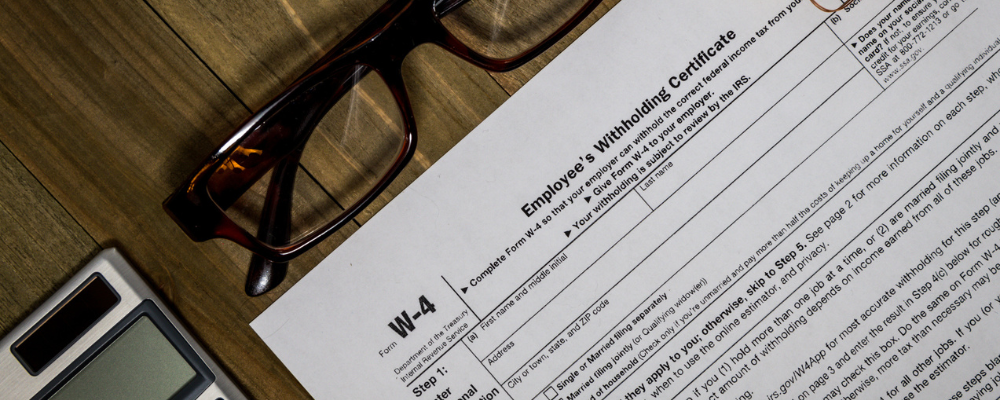
If you regularly work overtime, your current W-4 form likely tells your employer to withhold taxes on that extra income. By using the updated withholding calculator, you can adjust your documents to stop that unnecessary withholding. This puts your hard-earned overtime money back into your hands on payday.
Tax-Free Car Loan Interest
Vehicle ownership is a necessity for many Americans, but the rising cost of auto loans has burdened household budgets. The One, Big, Beautiful Bill introduces a brand-new benefit: the elimination of tax on car loan interest. This means you can now write off the interest you pay on your vehicle financing.
This unique deduction lowers your taxable income. When your taxable income drops, your tax liability drops with it. Adjusting your withholding to reflect this new deduction ensures your weekly or bi-weekly paychecks reflect your newly lowered tax bracket.
Expanded Deductions for Seniors
Retirees also benefit significantly from the recent legislative changes. The bill introduces a robust new deduction specifically tailored for seniors. This deduction protects a larger portion of fixed incomes, pension payouts, and retirement withdrawals from federal taxation.
Seniors often manage tight budgets, making accurate tax withholding critical. If you receive a pension or annuity, the updated IRS estimator will help you complete a new Form W-4P. This ensures your pension provider does not withhold more tax than necessary under the new senior-friendly tax rules.
Why You Must Check Your Withholding Now
Tax withholding is a delicate balancing act. When you fill out a Form W-4, you instruct your employer on how much money to send to the IRS on your behalf every pay period. The goal is to perfectly match your withholding to your actual tax liability.
Avoiding the Trap of Over-Withholding
Many taxpayers view a massive tax refund as a financial victory. In reality, a large refund means you overpaid the government all year. You essentially provided the IRS with an interest-free loan while depriving yourself of your own money.
With the new tax breaks on tips, overtime, and auto loan interest, your current withholding setup is likely too high. You are paying taxes on income that is no longer taxable. Updating your withholding puts that money directly into your monthly budget, allowing you to pay down debt, invest, or cover rising living expenses.
Preventing Underpayment Penalties
On the opposite end of the spectrum is under-withholding. If you do not withhold enough money from your paychecks, you will owe a lump sum when you file your tax return. If the shortfall is significant enough, the IRS will hit you with underpayment penalties and interest charges.
The One, Big, Beautiful Bill also modified several family-related credits, homeownership rules, and charitable giving guidelines. If these adjustments negatively impact your specific financial situation, you might need to increase your withholding. Checking the estimator now prevents a nasty surprise and expensive penalties next April.
Who Needs the IRS Tax Withholding Estimator the Most?
While every taxpayer should review their withholding in light of the new legislation, certain individuals need to make this a top priority. You should use the updated tool immediately if any of the following situations apply to you.
Workers with Multiple Income Streams
If you hold more than one job, or if you and your spouse both work, calculating withholding becomes incredibly complex. Employers do not know about your other income streams. They calculate your tax rate based solely on what they pay you, which often pushes you into a higher tax bracket than anticipated.
The updated calculator allows you to input information for multiple jobs. It accurately computes your combined household income and provides precise instructions on how to fill out the W-4 for each employer to avoid a massive tax bill.
Gig Workers and Freelancers
Independent contractors and gig economy workers receive income without any automatic tax withholding. You are responsible for making quarterly estimated tax payments. The newly updated estimator accounts for gig income alongside traditional W-2 wages.
By inputting your freelance earnings, the tool helps you determine if your W-2 job can withhold enough extra tax to cover your independent contractor liabilities. This strategy can save you from the hassle of managing quarterly payments altogether.
Taxpayers Experiencing Major Life Changes
Life events drastically alter your tax profile. If you recently got married, finalized a divorce, or welcomed a new child into your family, your tax situation has changed. A new baby brings child tax credits, while a marriage might bump you into a new filing status.
Combine these life events with the new legislative changes, and your old W-4 is completely obsolete. The estimator will guide you through these life changes to find your exact withholding sweet spot.
How to Use the Updated Tax Withholding Estimator
Taking control of your paycheck is incredibly simple. The IRS has made the estimator accessible, free, and completely anonymous. You do not need to create an account, log in, or provide any sensitive information like your Social Security number.
Step 1: Gather Your Financial Documents
Before you sit down at your computer, gather the necessary paperwork. The tool is only as accurate as the information you provide. You will need your most recent pay statements for yourself and your spouse.
You should also locate a copy of your most recent federal income tax return. Having your previous return handy helps you quickly reference your typical deductions, credits, and investment income.
Step 2: Access the Free Tool
You can access the tool directly through the government website. Visit the IRS Tax Withholding Estimator to begin the process. The platform is available 24 hours a day, 7 days a week, and works perfectly on both desktop computers and mobile devices.
Step 3: Input Your Information
The estimator guides you through a clear, step-by-step process. You will start by entering your basic profile, including your filing status and number of dependents. Next, you will enter your income details from your pay stubs.
This is where the new updates shine. The tool will specifically ask about tip income, overtime pay, and car loan interest to ensure you receive the benefits of the One, Big, Beautiful Bill. The entire process takes about 25 minutes for complex situations, and even less time if your finances are straightforward.
Step 4: Review Your Personalized Recommendation
Once you complete the questionnaire, the estimator works its magic. It will display your projected tax liability for the year and compare it to your current withholding trajectory.
The tool will tell you exactly whether you are on track for a refund or a tax bill. More importantly, it provides a precise, customized recommendation on how to adjust your withholding to reach a balance of zero, meaning you owe nothing and get nothing back.
Step 5: Submit Your New Forms
The final step is taking action. If the estimator recommends an adjustment, it will help you generate a newly completed Form W-4 (for employees) or Form W-4P (for pensioners). Print this document, sign it, and hand it directly to your employer’s payroll department or your pension provider.
You do not need to send this form to the IRS. Your employer will update their payroll software, and you will see the changes reflected in your next paycheck.
Take Action to Protect Your Paycheck
Tax laws are constantly evolving, and the One, Big, Beautiful Bill represents a major victory for the everyday taxpayer. However, these legislative wins only benefit you if you take the initiative to apply them to your personal finances.
Do not wait until tax season to discover you have been overpaying the government. Take 25 minutes today to gather your pay stubs and run your numbers. If you have questions about specific entries, review the official Tax Withholding Estimator FAQs for additional guidance. Empower yourself with these digital tools, optimize your withholding, and start keeping more of the money you earn.
If you have specific questions about your unique tax situation or would like further guidance on utilizing the IRS Tax Withholding Estimator, contact your PBMares tax advisor or reach out to Tax Partner Charles Dean Smith, Jr. For more information on tax planning and maximizing the benefits of recent legislative changes, our tax team is available to assist you.